


Designing Childhood, the Danish Way
In Copenhagen, children are not hidden away in pastel corners of the home. They sit at café tables, nap in prams parked outside bakeries in the cold, and grow up surrounded by objects that are expected to last. This cultural assumption—that childhood is not a decorative phase but a fully formed way of being—runs quietly through Danish design. It is also the foundation of Ferm Living’s children’s furniture and design collection, which treats young lives with the same seriousness, restraint, and warmth as adult ones.
Ferm Living, founded in 2006 and headquartered in Copenhagen, has long built its identity around balance: between modern lines and organic forms, between global craft traditions and Scandinavian discipline. In its children’s collection, that balance becomes more delicate—and more revealing. Designing for children exposes a brand’s values. There is nowhere to hide behind novelty or trend when an object is climbed on, dragged across floors, chewed, repurposed, and loved.
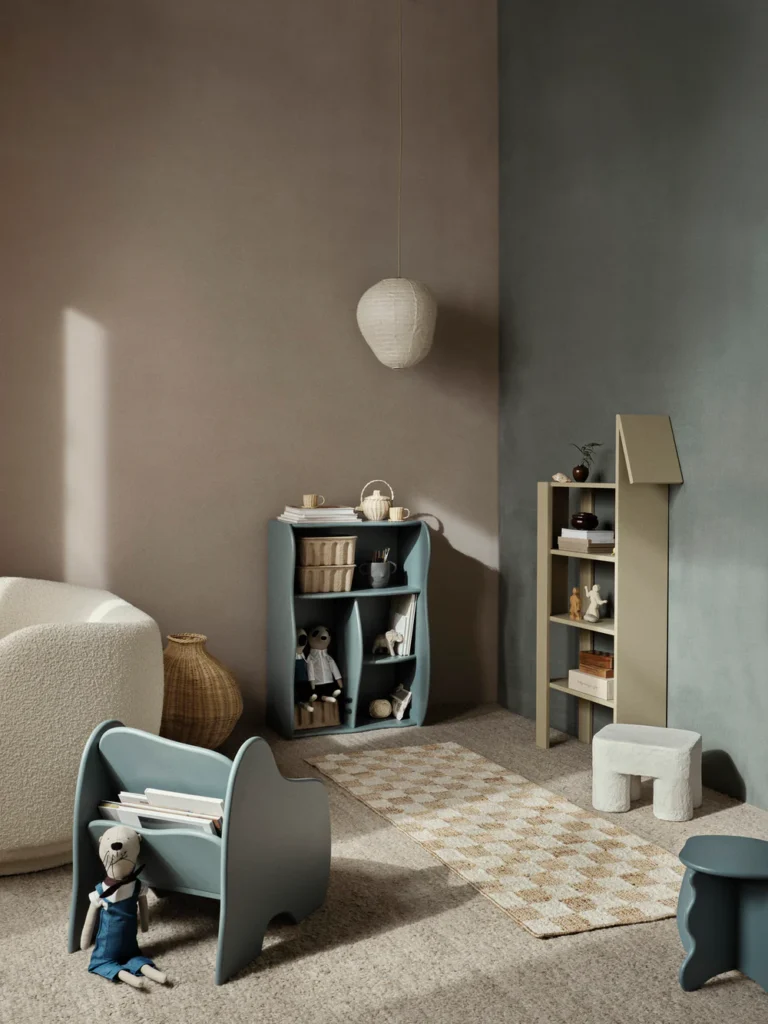
What Ferm Living resists, above all, is the cartoonification of childhood. Its children’s furniture does not rely on exaggerated shapes, loud colors, or visual gimmicks to signal who it is for. Instead, it borrows the same design language used throughout the rest of the home—clean lines, soft curves, natural materials—and simply adjusts the scale. The result is furniture that feels intentional rather than temporary, capable of aging alongside the child who uses it.
Take the brand’s tables and chairs, designed low to the ground and sturdy enough to survive years of daily use. They are not toys masquerading as furniture; they are real furniture, made small. This distinction matters. It allows a child’s room to feel like a place of agency rather than containment, a space where drawing, building, reading, and resting happen without the visual noise that so often accompanies children’s products.
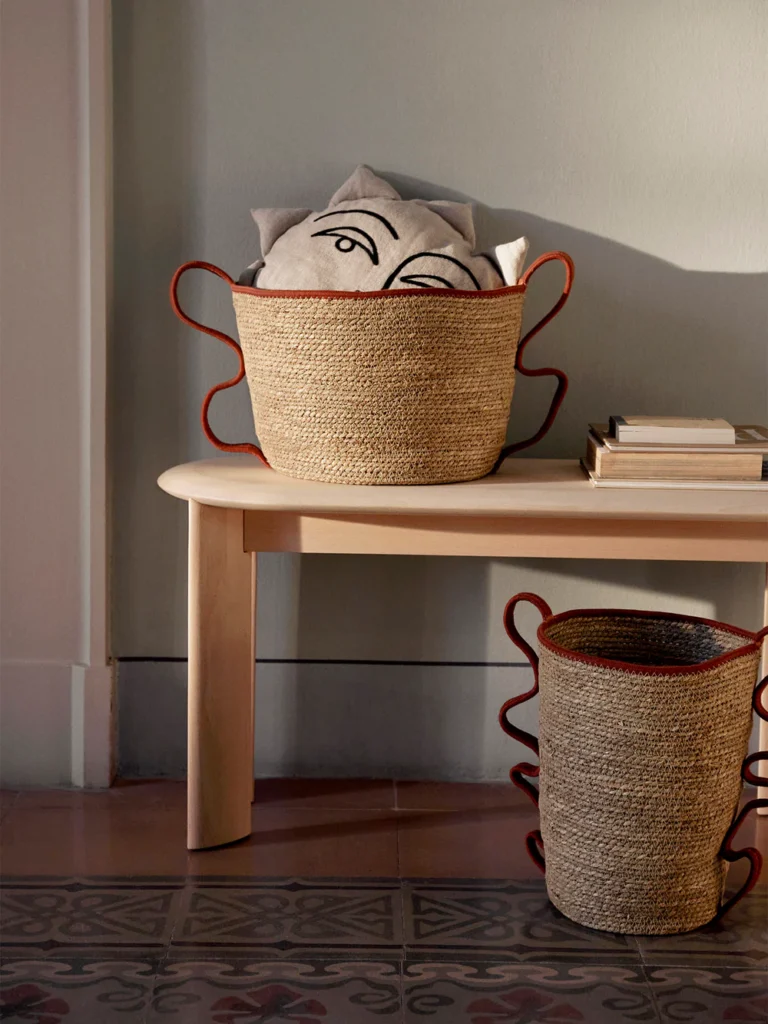
This approach reflects a distinctly Danish idea of childhood: that children do not need constant stimulation from their surroundings. They need space, material honesty, and a certain calm in which imagination can operate. Ferm Living’s muted palette—dusty blues, warm greys, soft greens—creates a backdrop rather than a performance. Play enters the room through use, not decoration.
Craftsmanship is where this philosophy becomes physical. Ferm Living speaks often about the importance of materials and making, and in the children’s collection this emphasis feels less like branding and more like necessity. Edges are rounded but not softened into anonymity. Wood is allowed to look like whttps://fermliving.com/collections/kids?page=5ood. Textiles invite touch rather than admiration from a distance. These are objects designed to be handled, not preserved.
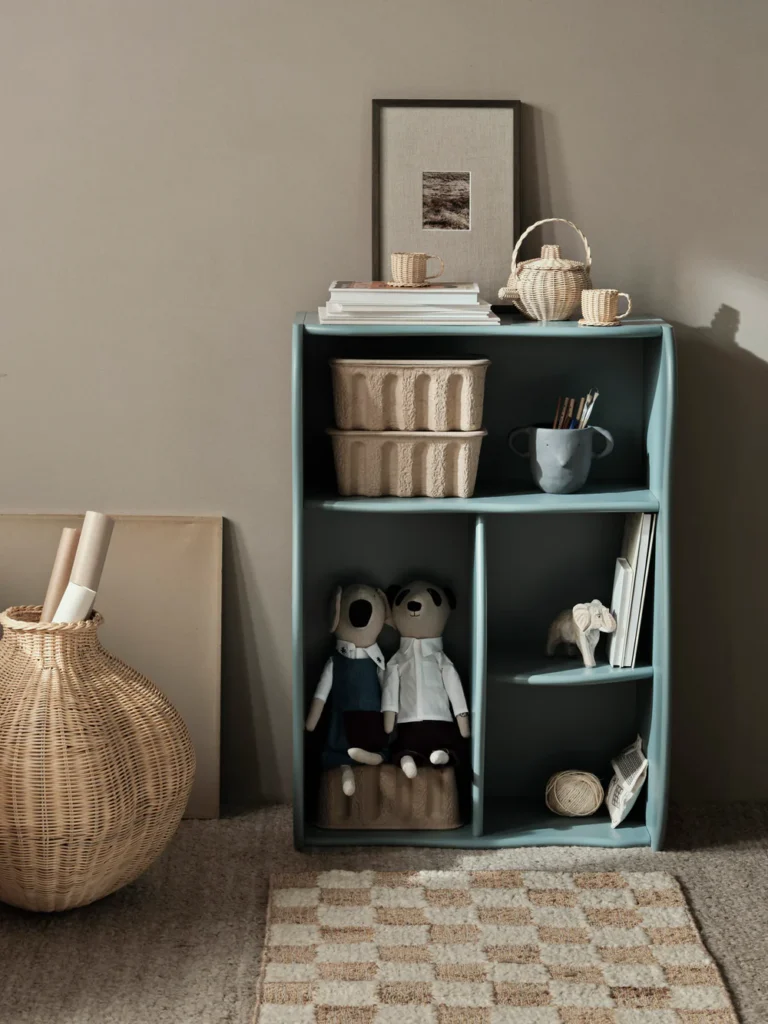
There is also an understanding, implicit rather than stated, that well-made children’s furniture is an act of respect. Respect for the child, whose world is shaped by the things within reach, and respect for the parent, who knows that durability is not a luxury but a form of sanity. A stool that doesn’t wobble, a shelf that holds up under weight, a bench that survives being stood on repeatedly—these are quiet triumphs of design that rarely make it into marketing copy.
The Danish soul often invoked in discussions of design is easy to sentimentalize, but here it manifests in something practical: moderation. Ferm Living’s children’s pieces do not dominate a room. They coexist. A child’s desk can sit comfortably next to an adult sofa without visual conflict. A toy storage solution does not announce itself as such. This coherence reflects modern family life, in which children’s spaces increasingly overlap with the rest of the home rather than being sealed off.
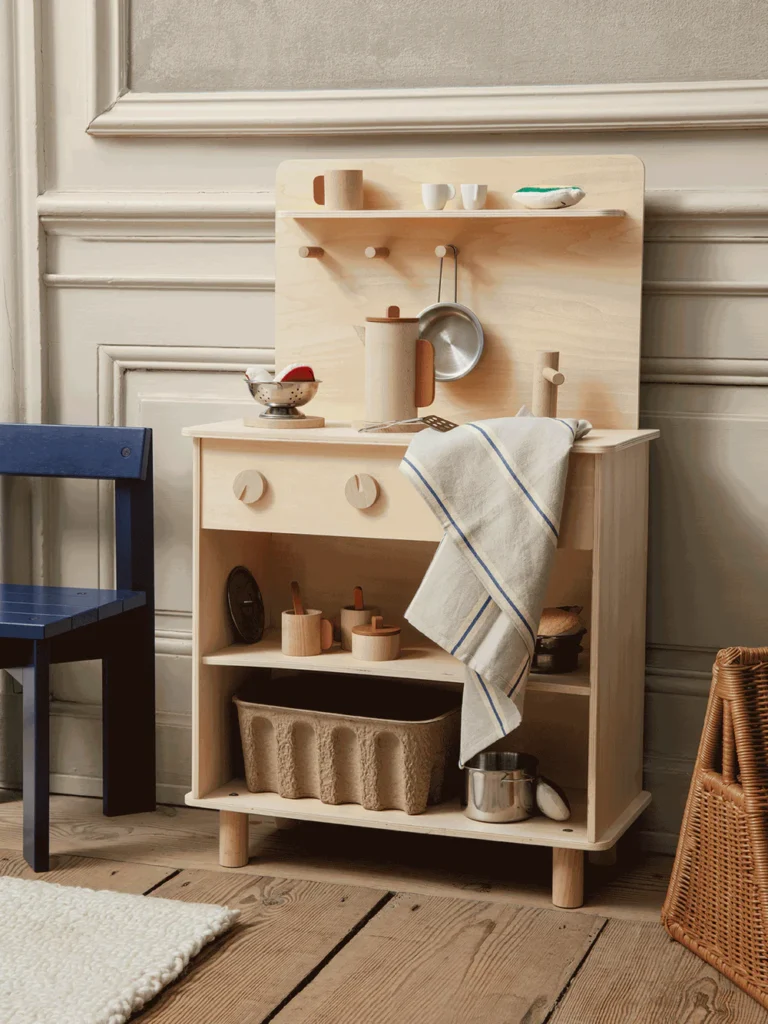
That overlap is where the collection feels most contemporary. Children’s rooms today are rarely just rooms for children. They are places where parents sit on the floor to read, where laundry accumulates, where conversations happen late at night. Ferm Living designs for this shared reality, creating furniture that supports multiple roles without losing clarity of purpose.
There is also a moral dimension embedded in the work, though it is expressed quietly. Sustainability, ethical production, and material responsibility are treated not as selling points but as baseline expectations. This restraint mirrors a broader Scandinavian tendency to let values show through action rather than declaration. In a children’s collection, this matters: the objects introduced early in life often shape a person’s sense of what is normal, what is worth caring for, what is disposable and what is not.
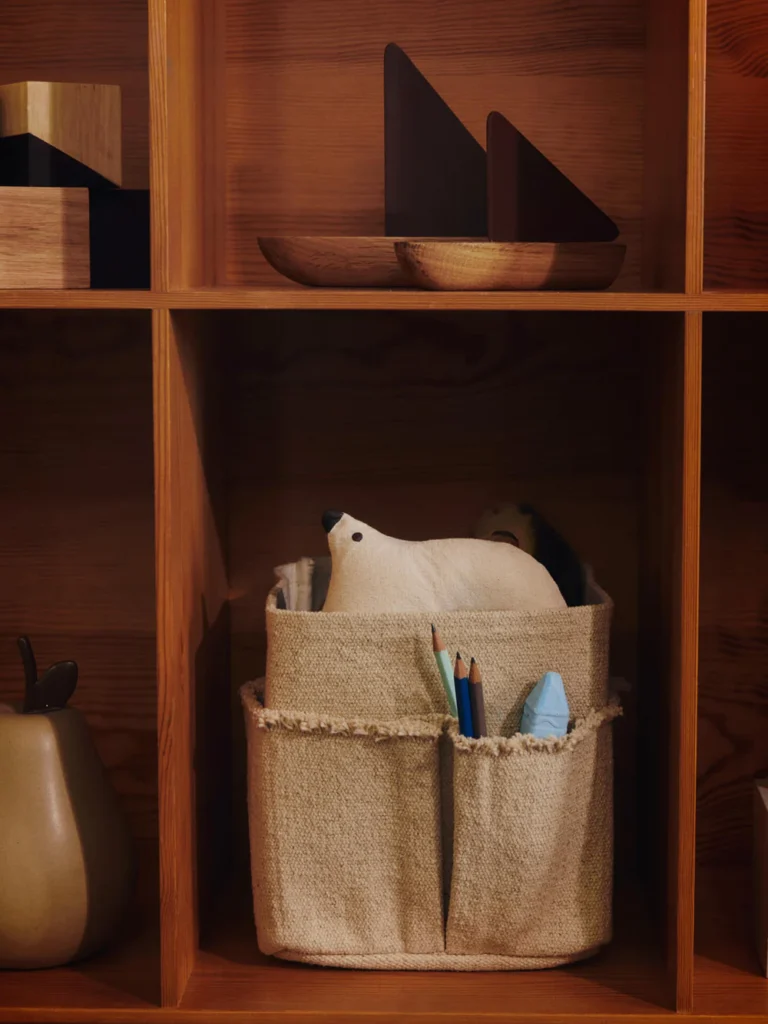
What emerges from Ferm Living’s children’s collection is not a fantasy of childhood, but a framework for it. These are not pieces designed to photograph well for a season and then disappear. They are meant to stay, to gather marks and stories, to feel familiar. They suggest a belief that children do not need to be surrounded by things that shout. They need things that hold.
In an era when children’s products often swing between overdesigned and underthought, Ferm Living offers something rarer: furniture that trusts both the child and the home. It is Danish design at its most convincing—not because it is minimal, but because it is measured. Not because it is beautiful, but because it is useful in a deep, enduring way.