


Fur, Fashion, and the Fault Lines of Power: Inside Europe’s Defining Style Debate
In Brussels, the air feels unusually charged this season—not with the anticipation of hemlines or silhouettes, but with something far more consequential. At the end of this month, the European Commission will make an announcement that could define not only the future of fashion in Europe, but the moral architecture underpinning it. On the table: a proposed EU-wide ban on fur farming and the sale of farmed fur products.
And yet, despite what appears to be overwhelming public and industry support, the outcome is far from certain.
More than 1.5 million European citizens have signed on in favour of the ban—the largest response ever recorded for a European Citizens’ Initiative. The science is unequivocal: experts have concluded that no caged system can adequately meet the welfare needs of animals farmed for fur. And culturally, fashion has long since begun to turn its back on fur.
Still, in the quiet corridors of power, resistance persists.

The Last Holdouts
Today, only five EU countries remain actively engaged in fur farming: Denmark, Finland, Greece, Iceland and Hungary. Together, they represent a shrinking but vocal opposition, lobbying the Commission to pursue softer “welfare improvements” instead of an outright ban.
It is a position that feels increasingly out of step—not just with public sentiment, but with the fashion industry itself.
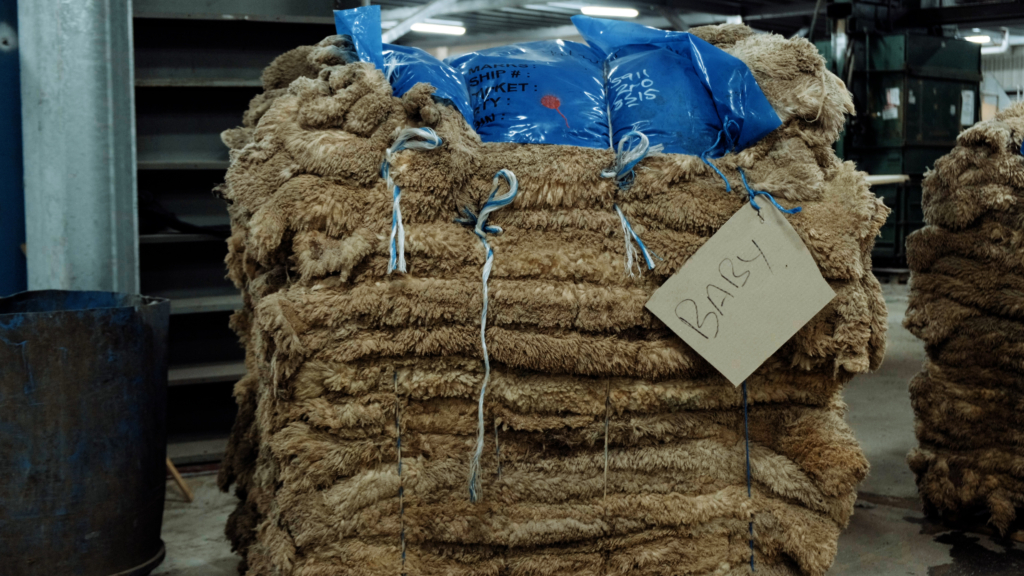
Across Europe, the fur sector is already in structural decline. It costs EU citizens hundreds of millions of euros annually in subsidies and compensation schemes, while employing a relatively small workforce. Denmark, once a global epicentre of mink production, now sees only a fraction of its farmers continuing post-pandemic, following a controversial mass cull that reshaped the industry almost overnight.
If anything, the economics tell a story of an industry propped up by inertia.
Fashion Has Already Moved On
Step away from policy and into the front rows of Fashion Week, and the contrast is stark.
In Copenhagen, widely regarded as Northern Europe’s most influential fashion capital, fur has been banned from the official schedule since 2022—part of a broader sustainability mandate that has redefined what it means to be a contemporary designer. “Since 2023, virgin fur has not been permitted,” says Cecilie Thorsmark, CEO of Copenhagen Fashion Week. “We support efforts urging the European Commission to introduce legislation that phases out fur farming and the sale of farmed fur within the EU.”
London followed suit in 2023. New York—famously slower to legislate than to innovate—will implement its ban in September 2026. Even media institutions have taken a stand, with major publishers moving to eliminate fur from their pages entirely.
The shift is not new, but it is now undeniable. Calvin Klein first renounced fur in 1994, long before sustainability became fashion’s dominant language. Since then, an entire generation of luxury houses—Gucci, Prada, Valentino, Saint Laurent—has followed.
What emerges is not a trend, but a consensus.
The Designers Rewriting the Narrative
If fur once symbolised luxury, its absence is now becoming a marker of innovation.
At New York Fashion Week last month, Collina Strada introduced “Biofluff,” a plant-based material that captures the tactile richness of fur without its ethical cost. Days later in Paris, Bottega Veneta unveiled garments crafted from recycled fibreglass—unexpected, luminous, and entirely animal-free. Even Louis Vuitton, one of the industry’s last holdouts, has begun experimenting with similar alternatives.
This is where the conversation shifts from restriction to possibility. The rejection of fur has not diminished creativity—it has expanded it.
Designers are no longer asking how to replicate fur, but how to transcend it.

A Cultural Reckoning
Behind the aesthetics lies a deeper cultural transformation.
Consumers—particularly younger generations—are increasingly unwilling to separate what they wear from how it is made. Across Scandinavia, support for a fur ban is overwhelming: 76% in Sweden, 64% in Norway, and 55% in Denmark. Across Europe more broadly, citizens are far more likely to support a ban than oppose it.
Emma Håkansson, founding director of Collective Fashion Justice, has been at the forefront of translating this cultural shift into political action. Fresh from action in Brussels as part of the Fur Free Europe campaign, she speaks with clarity—and urgency.
“The fashion industry is more than ready for a ban on fur farming and sales,” she says. “This would save six million animal lives each year and reduce our environmental impact from this polluting, harmful trade.
“We would love to see the few who remain in fur farming financially supported to justly transition into alternative, more communally beneficial work. The fur trade costs the EU hundreds of millions of euros each year, backed by public funds, and could not stand on its own two feet. These funds could also be better spent on fashion industry innovation and animal-free, plastic-free next-generation material development.”
Her argument is not only ethical, but economic.

The Risk of Delay
And yet, for all this momentum, there remains a familiar tension: the gap between cultural progress and legislative action.
Fashion has declared fur obsolete. Science has deemed it indefensible. The public has rejected it. But policy, as ever, lags behind.
The concern now is that compromise—those vague promises of “welfare improvements”—could stall meaningful change. That a small coalition of legacy interests might dilute what has otherwise become a clear mandate.
It would not be the first time.
What Comes Next
Whatever the outcome of this month’s vote, one thing is certain: the trajectory is set.
The industry has already adapted. Designers are innovating. Consumers are aligned. Even some within the fur trade have begun to acknowledge its decline.
The question is no longer whether fashion will be fur-free—but how quickly legislation will catch up.
Back in Brussels, the decision looms. It is, in many ways, a test of whether governance can move at the speed of culture—or whether it will remain tethered to the past.
For an industry built on reinvention, the answer feels overdue.
https://www.collectivefashionjustice.org/articles/will-the-european-commission-ban-fur