


At Lanserhof Sylt, Longevity Is Treated as a Conversation, Not a Promise
An interview with Dr. Jan Stritzke, Medical Director
On the northern edge of Germany, where the North Sea presses insistently against dunes and the wind edits every thought down to its essentials, Lanserhof Sylt does not look like a place obsessed with the future. The clinic — pale, restrained, folded gently into the landscape — feels anchored in the present tense. This, Dr. Jan Stritzke tells me, is intentional.
“Longevity,” he says, “is not about living forever. It’s about living well for longer — and understanding what ‘well’ actually means for each person.”
Stritzke, the medical director of Lanserhof Sylt, speaks with the careful cadence of someone accustomed to translating complexity into something usable. During our conversation, recorded over the course of a quiet afternoon inside the clinic, he returns repeatedly to the same idea: that modern medicine has become very good at extending life, but far less skilled at explaining how to inhabit it.
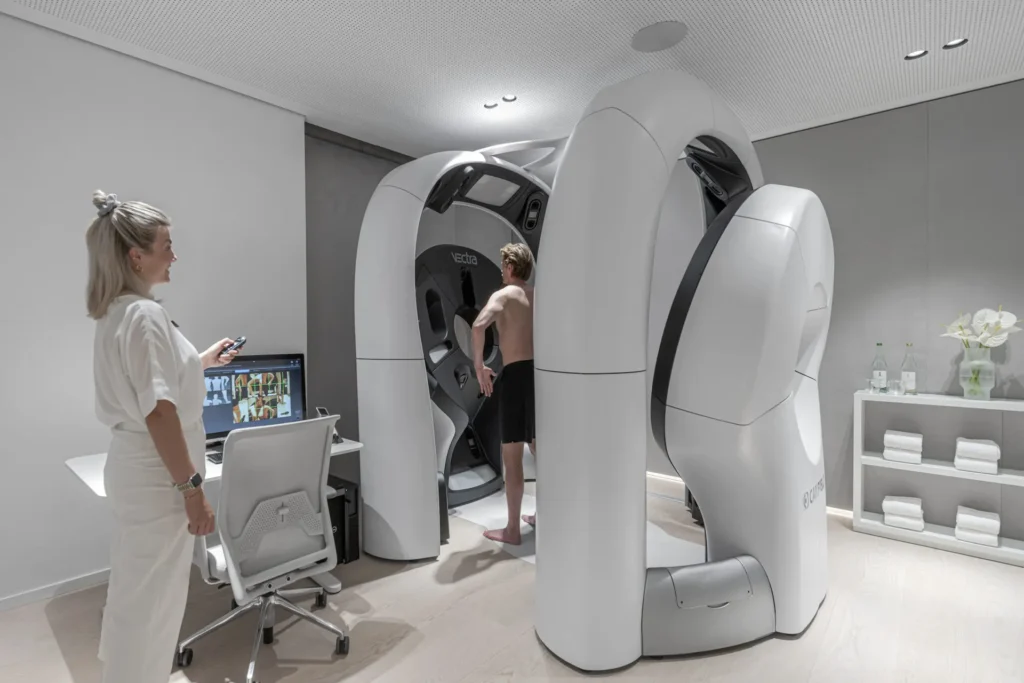
Lanserhof Sylt, part of the Lanserhof group known for its integrative medical approach, positions itself at the intersection of diagnostics, prevention, and behavioral change. It is often described as a “longevity clinic,” but Stritzke resists the term when it veers toward marketing shorthand. Longevity, in his telling, is not a protocol or a supplement stack. It is a long negotiation between biology, environment, and habit — one that most people enter far too late.
“What we see,” he explains, “are people who have been very successful at ignoring their bodies. They come to us not because they are ill in a classical sense, but because something feels off — energy, sleep, focus, resilience. These are early signals, not failures.”
Sylt, an island better known for bracing weather and discreet German wealth, turns out to be a fitting backdrop for this philosophy. The environment enforces simplicity. There is little visual noise, fewer distractions. Patients walk along the sea, breathe differently, sleep more deeply — sometimes before any intervention begins. Stritzke is quick to point out that context matters as much as treatment.
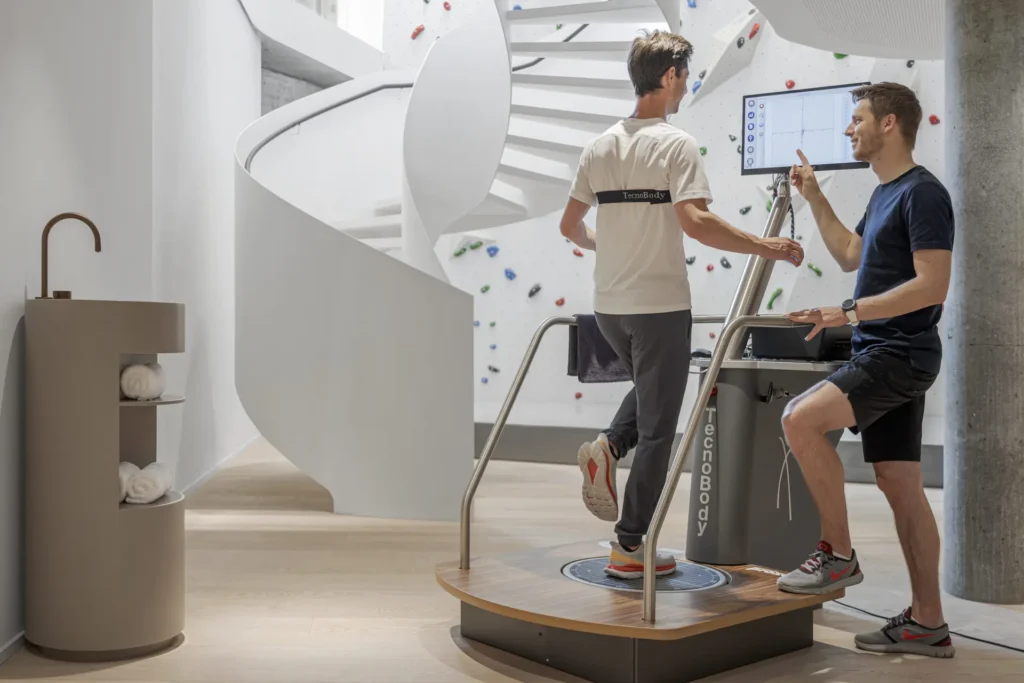
“You cannot separate medicine from setting,” he says. “Stress is not just psychological. It’s sensory. Light, noise, pace — these things change physiology.”
Inside Lanserhof, that belief is operationalized through a battery of diagnostics that can feel, at first, overwhelming: metabolic assessments, cardiovascular screening, inflammation markers, microbiome analysis. But Stritzke is careful to frame data as a starting point, not an endpoint.
“Data without interpretation is anxiety,” he says plainly. “Our job is not to generate numbers. It’s to explain what they mean — and what can realistically be changed.”
This realism is central to his approach. Unlike many longevity evangelists, Stritzke avoids absolutism. He does not promise optimization without trade-offs, nor does he suggest that aging can be hacked into irrelevance. Instead, he talks about trajectories.
“If you understand where you are on a curve,” he explains, “you can influence where it goes next. But you cannot jump curves entirely.”
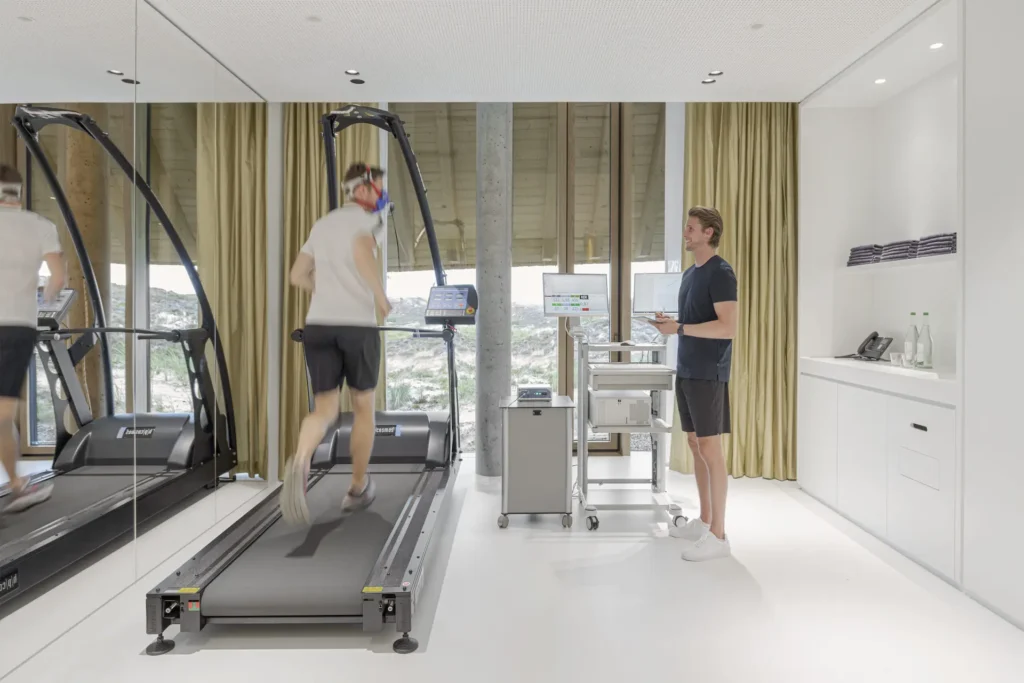
Much of the clinic’s work focuses on what he calls “metabolic clarity” — restoring the body’s ability to regulate itself efficiently. This includes nutrition plans that emphasize digestion and timing as much as content, movement programs calibrated to individual capacity, and sleep protocols that treat rest as a medical intervention rather than a lifestyle luxury.
One of the defining features of Lanserhof Sylt is its emphasis on the gut, a legacy of the Lanserhof method that Stritzke continues to evolve. He speaks about the digestive system not as an isolated organ network, but as a signaling hub that influences immunity, inflammation, and even mood.
“When the gut is overwhelmed,” he says, “everything else compensates — until it can’t.”
Yet the most striking part of the conversation is not the science, but the restraint with which it is deployed. Stritzke is wary of the way longevity has been absorbed into a culture of self-surveillance, where every deviation becomes a problem to fix.
“There is a danger,” he notes, “in turning health into a performance. People come in already exhausted by trying to do everything right.”
Lanserhof’s answer to this exhaustion is structure — but also permission. Patients follow schedules, yes, but they are also encouraged to slow down without guilt. Silence is not treated as empty time. Meals are intentional, sometimes austere, but framed as recalibration rather than deprivation.
“What we are really treating,” Stritzke says, “is overload.”
That overload, he argues, is the defining condition of modern longevity anxiety: too much information, too many choices, too little coherence. The clinic’s role, as he sees it, is to reduce complexity to something actionable — and sustainable.
“We don’t want patients to leave with ten new rules,” he says. “We want them to leave with three things they will actually keep doing.”
This pragmatism extends to the question of aging itself. Stritzke speaks candidly about decline — muscular, cognitive, metabolic — not as a moral failure but as a biological process that can be delayed, softened, and better managed.

“Aging is not optional,” he says. “Suffering is.”
It’s a line that could sound rehearsed, but in context it lands differently. There is no triumphalism here, no fantasy of eternal youth. Instead, there is a consistent emphasis on agency — not control, but participation.
As our conversation ends, the light outside has shifted, the North Sea asserting itself again through the windows. Patients move quietly through corridors, wrapped in blankets, unhurried. Lanserhof Sylt does not feel like a place chasing the future. It feels like a place trying to restore a relationship — between people and their bodies, between medicine and meaning.
Longevity, in this setting, is not a countdown or a competition. It is a practice. And under Stritzke’s direction, it is treated less as a promise of more years than as an invitation to inhabit the ones already unfolding — with more clarity, less noise, and a deeper sense of measure.