


In Portugal’s Douro Valley, a Hotel That Teaches You How to Slow Down
The road into the Douro Valley folds inward on itself like a thought you didn’t know you were having. Vineyards climb improbably steep hillsides, stitched together by stone walls and patience. The river below glints and disappears, a ribbon tugged tight between mountains. Then, at the end of a long drive through terraced vines and olive trees, the gates of Six Senses Douro Valley open quietly, without announcement, as if the place assumes you have already made the decision to slow down.
Six Senses occupies a restored 19th-century manor house once owned by a port-wine family, and the building still carries itself with the dignity of that inheritance. Pale stone, arched windows, tiled roofs: it could be another grand estate in northern Portugal were it not for the way the hotel resists ostentation. Luxury here is not declared; it’s discovered gradually, through absence as much as presence. There is no grand lobby theatrics, no scented fog machines or cavernous halls. Instead, there is light, air, and the sense that someone has deliberately removed the unnecessary.
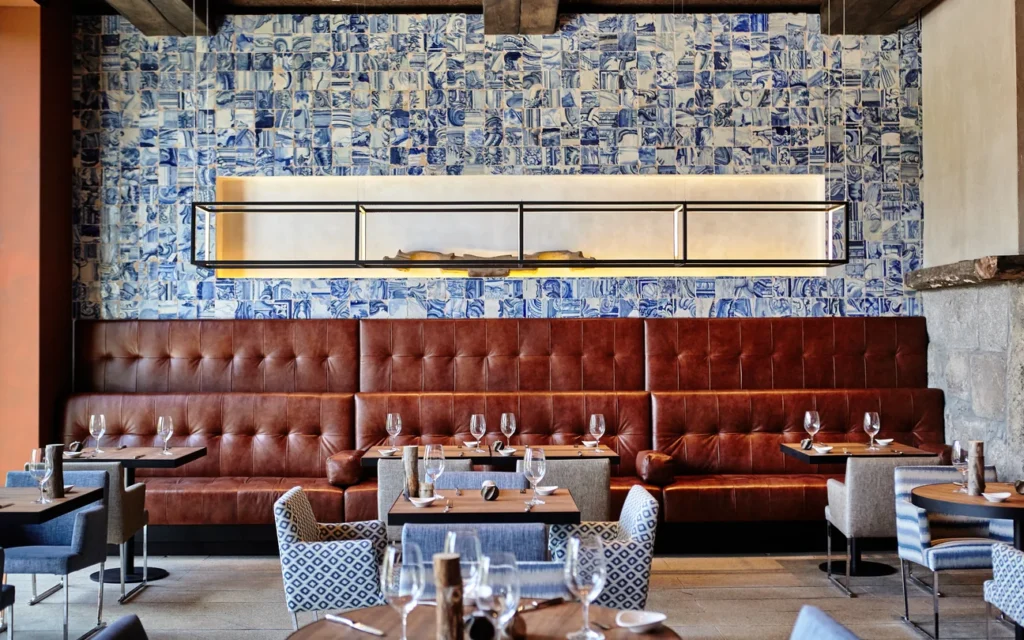
Check-in happens seated, over herbal tea grown on the property, and the staff speak in low, unhurried tones. It’s not the hushed reverence of formality but the quiet of confidence. Six Senses has always traded on the promise of wellness without preachiness, and here, in the Douro, that philosophy feels particularly well matched to its surroundings. This is a working wine region, after all, shaped by centuries of labor and restraint. Excess would feel out of place.
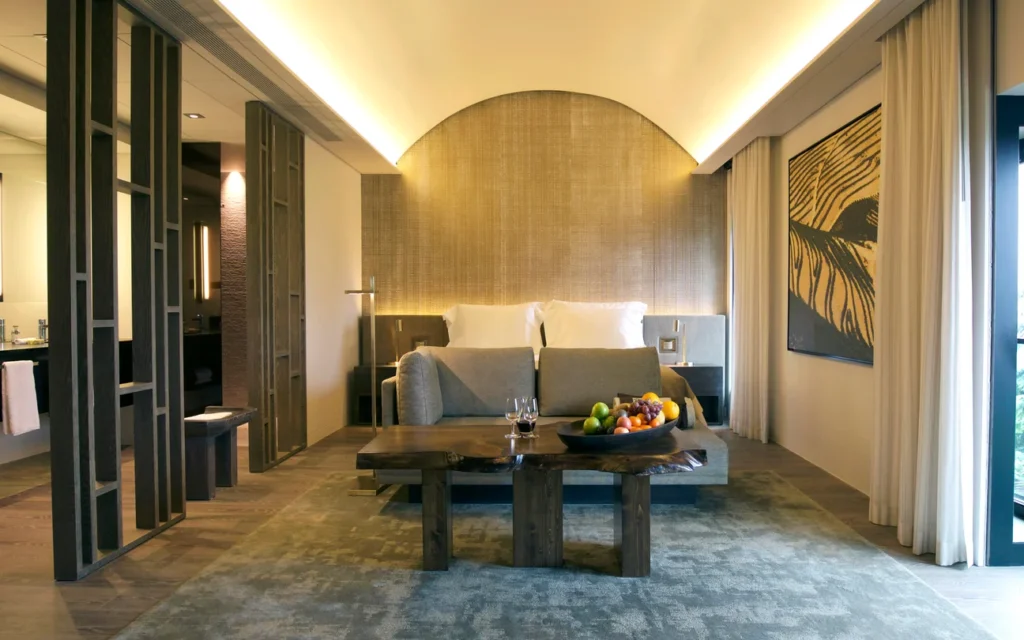
The rooms — scattered between the manor and newer, terraced buildings that step gently down the hillside — are studies in tactile calm. Floors are warm wood or stone, rugs are handwoven, and the color palette mirrors the valley itself: olive greens, river blues, sun-bleached neutrals. Large windows frame vineyards like living murals, and it is not uncommon to find yourself standing still, mid-unpacking, simply watching the light shift over the slopes. Technology is present but discreet; screens recede when not in use, and the emphasis is on physical comfort — the weight of the linens, the curve of the furniture, the quiet effectiveness of things that work without asking for attention.
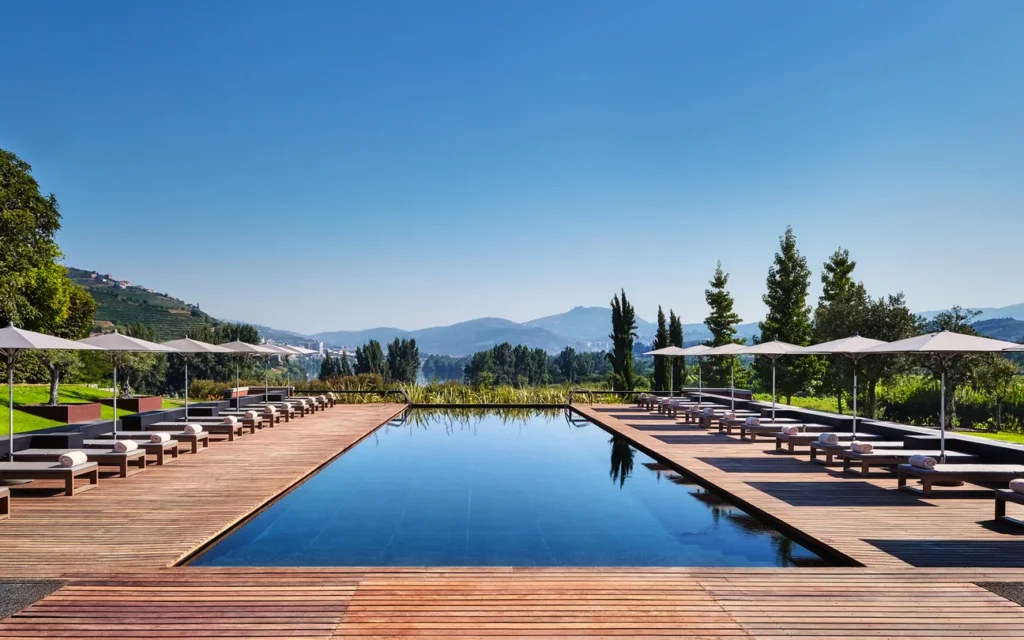
If there is a center of gravity at Six Senses Douro Valley, it is the spa, housed partly within the original manor and partly in a modern extension that opens toward the landscape. This is not a spa in the sense of indulgent escape alone, though indulgence is certainly available. It is closer to a campus of well-being, where treatments are paired with consultations, sleep tracking, and nutrition advice — all optional, all offered without pressure. The indoor pool stretches toward floor-to-ceiling windows, and floating there, watching fog lift from the valley in the early morning, feels less like an activity and more like a recalibration.
Outside, the hotel grounds encourage wandering. Paths snake through herb gardens and vineyards, past meditation platforms and hammocks strung between trees. There is a sense that time has been padded here, softened around the edges. Days fill themselves easily: a morning yoga class overlooking the river, a long breakfast that drifts into coffee, an afternoon walk that somehow consumes hours. The temptation to do nothing at all — to sit with a book, or without one — is not only permitted but subtly endorsed.
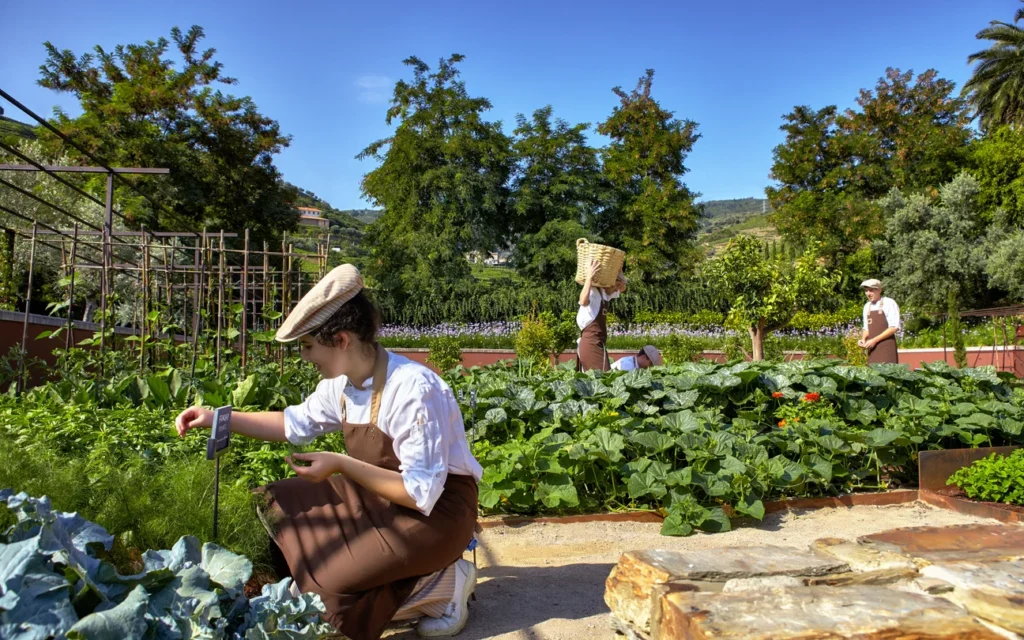
Food at Six Senses Douro Valley reflects the same philosophy of grounded refinement. The main restaurant, Vale de Abraão, overlooks the valley and serves dishes rooted in Portuguese tradition but gently reimagined: bacalhau paired with garden vegetables, lamb slow-cooked and fragrant with herbs, desserts that favor fruit and texture over sugar. Ingredients are sourced locally or grown on site, and the menu shifts with the seasons. Wine, unsurprisingly, is taken seriously. The hotel’s wine library offers tastings that move beyond the obvious ports to showcase the complexity and evolution of Douro table wines, guided by sommeliers who speak as comfortably about soil composition as they do about flavor.
Yet what lingers most after a stay here is not a particular meal or treatment, but a feeling — a loosening. Six Senses Douro Valley does not attempt to overwhelm guests with choice or spectacle. Instead, it creates conditions in which attention naturally sharpens. You notice the way bread tastes when you’re not rushed. You sleep more deeply than expected. You find yourself listening — to birds, to the river, to conversations that might otherwise have skimmed the surface.
There are, of course, moments when the hotel’s careful curation shows. Wellness can feel, at times, like a lifestyle brand rather than a human need, and some of the programming — biohacking tools, longevity language — flirts with trendiness. But the setting itself tempers this. It’s hard to take optimization too seriously when you are surrounded by vines planted generations ago, tended with methods that have outlasted fashions entirely.
Leaving the Douro Valley requires retracing that winding road, climbing back out toward the wider world. The transition is abrupt. Emails return. Time tightens again. But something of the valley lingers — a recalibrated sense of pace, perhaps, or a reminder that luxury does not always announce itself loudly. Sometimes it waits quietly, among the vineyards, until you are ready to notice.
In that sense, Six Senses Douro Valley succeeds not by redefining luxury, but by stripping it back to something older and more durable: space, care, and the rare permission to simply be where you are.
https://www.sixsenses.com/en/hotels-resorts/europe/portugal/douro-valley/